Pathology|24 Nov 2026
Botrytis from flowering to bunch closure in grapes and strawberries
Much botrytis bunch rot starts at flowering. How infection happens, the spray windows to bunch closure, and where daily spore counts help.

BioScout
5 Min Read
Botrytis bunch rot shows up at harvest, but much of it starts at flowering. The fungus, Botrytis cinerea, gets into grape flowers and strawberry blossoms, then sits quietly in the developing fruit until it ripens. By the time you see grey mould, the infection may be weeks old. This guide covers how that happens, the spray windows that matter from flowering to bunch closure, and where daily spore counts help.
Where the spores come from
Botrytis survives winter in canes, as small black sclerotia on the vine and in ground litter, and in last season's mouldy bunches and mummies. In wet or humid weather it produces conidia, which spread on wind and water splash. AWRI recommends cultivating prunings into the soil to break down this carry-over.
Most spores land close to where they formed. One study found 95% deposited within a metre of the source in a vineyard. That is why the spore load in your own block matters more than a regional average.
Grapes: infection at flowering, rot at ripening
Grape flowers are most susceptible just after capfall. The scar where the cap drops off is an easy way in. Those infections then go latent: natural antifungal compounds in the green berry keep the fungus in check, and they fade as the berry softens at veraison. A few early infections can then spread quickly through a ripening bunch. Caps, aborted flowers and shot berries trapped inside the bunch give the fungus a second route in.
Conditions that favour infection:
- temperatures of 15 to 25°C, with an optimum around 20°C
- wet, humid weather; berries have been infected after as little as four hours of wetness across 12 to 30°C
- dense canopies and tight bunches
- thin-skinned, tight-bunched varieties such as Chardonnay, Pinot Noir, Sauvignon Blanc, Semillon and Riesling
- berry splitting after rain later in the season
The damage reaches the winery
Botrytis produces laccase, an enzyme that degrades flavour and colour, causes oxidative spoilage and is not stopped by SO2. Many wineries apply price penalties at 3% or more bunch rot severity at harvest.
The three spray windows
AWRI's guidance names three key times:
- 80% capfall. The best chance to control latent infections. Spraying earlier risks the product falling off with the caps, and translaminar products work better here.
- Pre-bunch closure. The last chance to get product inside the bunch, onto the trash and shot berries that can harbour infection. Once bunches close, the inside is out of reach.
- Veraison to seven days before harvest. Product choice narrows here, limited by market and winery requirements, and the most effective products often can't be used because of residue risk.
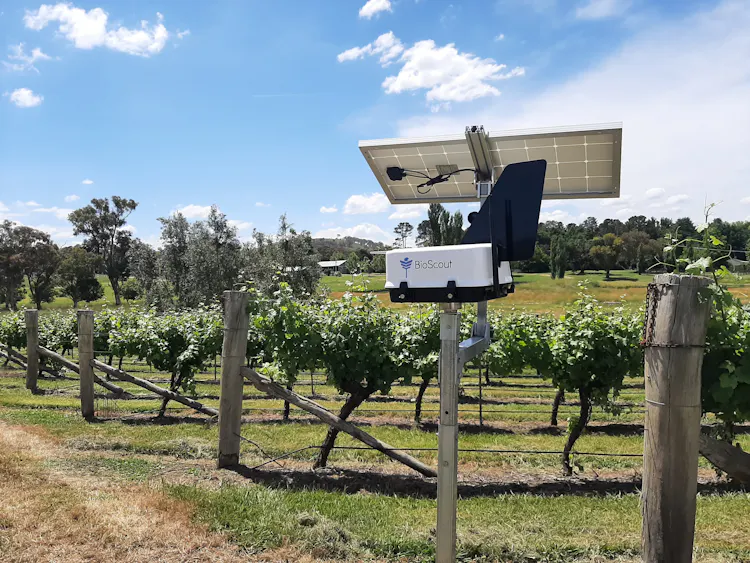
That makes flowering and pre-bunch closure, the next few weeks in most regions, the sprays that set up the rest of the season. Knowing the spore loads within these spray windows helps guide specific spray times with both pest targets and ROI front of mind. BioScout’s unit technology can provide the in-field data needed to make these spray decisions based on threats, not the calendar.
CropLife Australia's resistance management strategy lists Groups 2, 7, 9, 9 + 12, 11, 17, 19, 21 and 52 for botrytis in grapes. CropLife recommends that you use them as protectants, use three different groups if you apply three or fewer sprays, and never apply more than two consecutive sprays from the same group, counting across the end of one season and the start of the next.
Canopy work matters as much as chemistry. Removing the eight or so basal leaves at the start of flowering (E-L 19) loosens bunches and reduces rot. Bunch-zone leaf and lateral removal, open training systems, moderate nitrogen and control of light brown apple moth all help.
Strawberries: the same fungus, a faster crop
In strawberries, grey mould also gets in through the flowers. Petals, stamens and pistils are infected first, and the infection waits in the developing fruit until the weather suits it. Old, dying leaves are the main source of spores for flower infection. Temperatures around 20°C with long periods of rain, high humidity and leaf wetness favour the disease, and up to 80% of a crop can be lost in wet weather.
Queensland research shows what is at stake. In trials in south-east Queensland, untreated plots lost 25 to 38% of fruit to grey mould, against 3 to 4% under a program of multi-site protectants with single-site products added in wet weather. In that region, harvest runs from May to October and fungicide programs can run for up to 20 weeks. In drier regions, a few sprays during flowering can be enough. Single-site groups are limited to three sprays a season, and resistance to Groups 2, 9 and 17 has been reported in Queensland.
What spore counts add, and what they don't
BioScout’s unit samples the air every day, takes images at a 400x magnification and counts botrytis conidia in the tape scan. Because most botrytis spores land close to where they formed, a count from inside your own crop says more than a regional reading.
Currently, no published threshold yet links outdoor spore counts to a specific level of disease in grapes or strawberries, and spores are present on most days in many regions. A count on its own does not tell you to spray. What it does tell you is whether spore pressure is building into a critical window:
- Rising counts through flowering, with wet weather forecast: make sure the 80% capfall spray is on, with good coverage.
- Rising counts before bunch closure: this is the last chance to protect the inside of the bunch.
- Low counts through a dry flowering: a reason to review whether every planned spray is needed, alongside your agronomist's advice and your block's history.
Log your sprays and what you find in the rows. Over a season, the record of counts, weather and disease in each block is what turns a spore count into a decision.
For more on managing the disease, see AWRI's botrytis information pack.